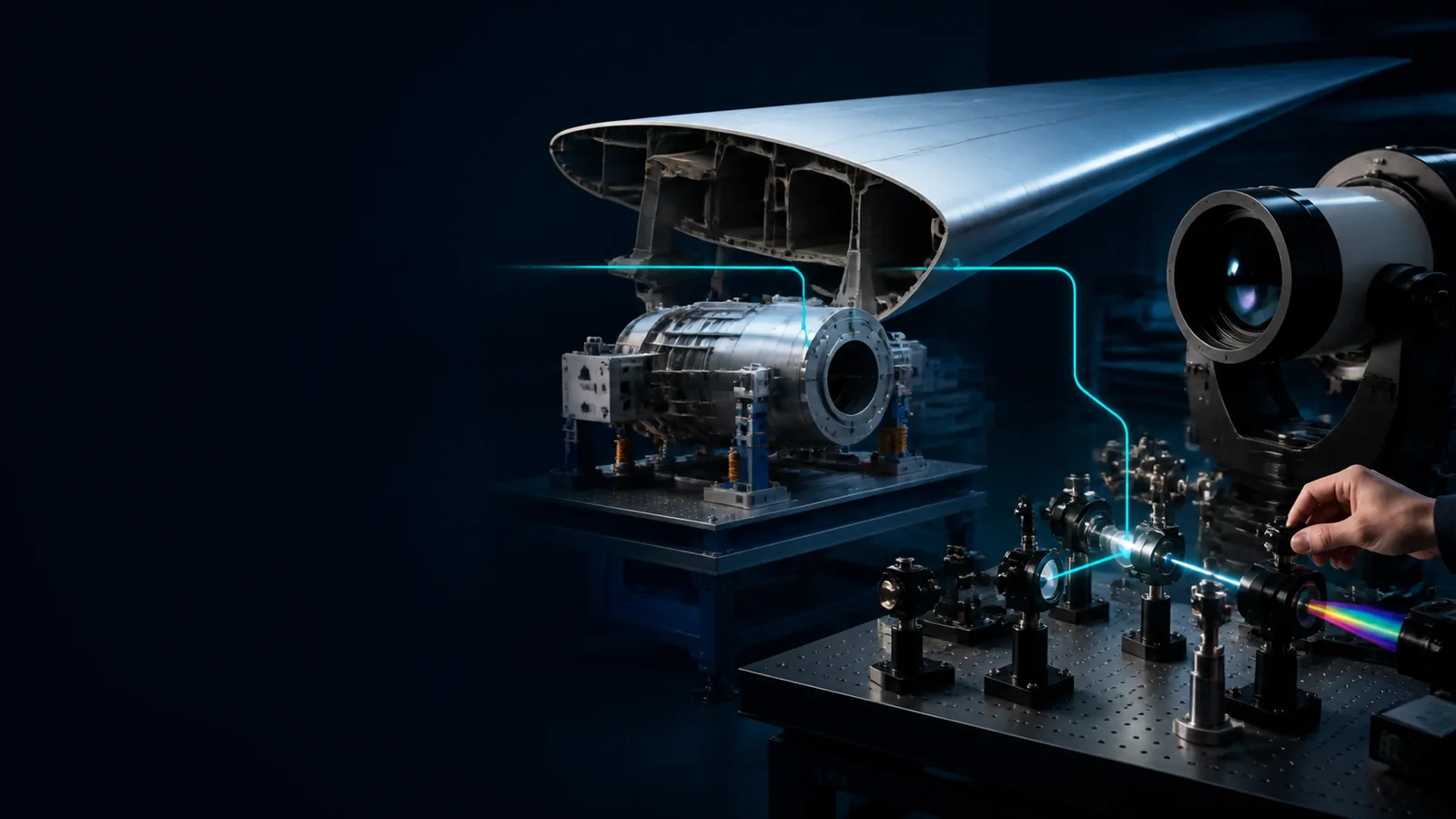

One degree asks how a vehicle survives launch, flies, and completes a mission. The other asks which physical laws explain stars, galaxies, and the universe. The aerospace engineering vs astrophysics choice starts with the fact that both use advanced math and physics but train you to produce different kinds of work.
The useful way to compare aerospace engineering vs astrophysics is to start with the problem you want to solve. Do you want to design and test a system, or do you want to explain an observation? That choice matters more than the fact that both subjects have “space” in their orbit.
Aerospace Engineering vs Astrophysics at a Glance
In aerospace engineering vs astrophysics, the strongest overlap is the mathematical foundation. The split appears when you ask what the math is for. An aerospace engineering student may use it to predict loads, control motion, or evaluate a design. An astrophysics student may use it to model radiation, gravity, plasma, or the evolution of a physical system.
That difference follows you into internships and graduate study. Engineering work tends to produce specifications, models, tests, software, and hardware decisions. Astrophysics work tends to produce analyses, simulations, observations, and research findings.
| Question | Aerospace engineering | Astrophysics |
|---|---|---|
| Central problem | How should a flight or space system be designed and verified? | What physical process explains what we observe? |
| Academic home | Engineering school or department | Physics, astronomy, or physical-science department |
| Typical work product | A model, design, test result, control system, or technical decision | An analysis, simulation, observation, paper, or research result |
| Bachelor’s direction | A direct route into many engineering roles when the coursework matches the job | A foundation for technical work and a common step toward graduate research |
| Best fit | You want to build and test systems under constraints | You want to investigate physical questions with data and theory |
What Do Aerospace Engineering Students Study?
Aerospace engineering begins with calculus, physics, programming, and the engineering sciences. The major then moves into subjects connected to flight and spacecraft, such as fluids, structures, dynamics, propulsion, controls, orbital motion, systems, and design. The exact balance differs by school, which is why the official curriculum matters more than the degree title alone.
Look closely at the senior design sequence, laboratories, computing tools, and available technical electives. A program that concentrates on aircraft is a different fit from one with a deep spacecraft or astronautics path. The aerospace engineering program rankings let you compare the federal program set first, then the school links let you verify the actual course plan.
You like constrained problems.
Engineering decisions have requirements, tradeoffs, deadlines, and test criteria. There is rarely one elegant answer.
You want a build-test loop.
You should enjoy moving between equations, code, models, prototypes, and measured results.
You care about systems.
A good component can still fail inside a bad system. Aerospace engineering repeatedly asks you to account for interfaces.
What Do Astrophysics Students Study?
Astrophysics usually grows out of a physics core. You study mechanics, electromagnetism, quantum physics, thermal physics, mathematics, computation, and statistics, then apply those tools to stars, galaxies, cosmology, high-energy events, planetary systems, or other research areas.
Department structure matters. One school may offer astrophysics as its own major, another may place it inside astronomy, and another may build it as a physics concentration. Compare the astronomy and astrophysics program rankings, then read the required-course list and the undergraduate research pages together. The label tells you less than the sequence of physics, computing, observing, and research work.
You want to explain observations.
The work often starts with a measurement or model and asks which physical explanation holds up.
You enjoy open questions.
Research problems can stay unsettled after months of analysis. Progress may be a better bound or a rejected explanation.
You are open to graduate study.
Research astronomer work usually calls for an advanced degree, so your undergraduate choice should also prepare you for that next step.
Which Careers Follow Aerospace Engineering or Astrophysics?
Aerospace engineering is the clearer match to the BLS aerospace engineer occupation. BLS reports a national wage range from $86,700 at the 10th percentile to $205,890 at the 90th percentile, with a $134,960 median. Your first job still depends on experience, location, employer, and the systems you know.
Astrophysics lines up most directly with research and analysis routes. The BLS astronomer occupation has a $128,820 median and 2,120 jobs in the same release. That employment base is much smaller than the 67,710 aerospace engineer count. Astrophysics graduates also take their quantitative skills into software, data, instrumentation, and other technical work, but the degree title never guarantees a specific role.
Use the space careers guides to work backward from a job, and check the space career salary pages for occupation-specific pay rather than treating one headline number as the salary for every graduate.
Is Aerospace Engineering Harder Than Astrophysics?
Neither degree is the easy version of space. Both demand calculus, physics, computation, and persistence. Aerospace engineering adds tightly sequenced engineering prerequisites, design constraints, team projects, and laboratory work. Astrophysics pushes farther into theoretical physics, scientific computing, statistical inference, and research questions with less tidy answers.
The harder degree is the one whose daily work you dislike. A student who loves design reviews may hate an open-ended research problem. A student who loves physical theory may find systems documentation draining. Compare required courses, not course titles chosen for marketing.
How Should You Make the Aerospace Engineering vs Astrophysics Choice?
Pull the required curriculum for each program you are considering. Mark the courses that excite you, the ones you can tolerate, and the ones you would dread. Then look at faculty projects, laboratories, undergraduate research, design teams, and the jobs held by recent graduates when the school publishes them.
Choose aerospace engineering when you want to design and verify physical systems. Choose astrophysics when you want to study the universe through physics and data. If both appeal to you, compare an engineering major with physics or astronomy electives against an astrophysics major with computing and instrumentation work. The bachelor’s versus master’s guide can help you decide how far the first degree needs to take you.
Our ranking methodology explains which federal fields enter the directory and why the ranking keeps engineering and astrophysics in separate peer groups.
Questions readers ask
Frequently Asked Questions
Is Astrophysics Considered Engineering?
Can an Aerospace Engineer Become an Astrophysicist?
Can an Astrophysics Graduate Work in Aerospace?
Which Degree Is Better for Working on Spacecraft?
Do Aerospace Engineering and Astrophysics Use the Same Math?
Research note
How This Guide Was Checked
Program counts come from the federal IPEDS program records used in this directory. Occupation figures come from the Bureau of Labor Statistics Occupational Employment and Wage Statistics release dated May 2025. Read the ranking and data methodology for the exact program boundaries and scoring rules.