The occupation
What Does a Computer Hardware Engineer Do?
Computer hardware engineers create schematics, build and test hardware, analyze test results, revise designs, document procedures, update equipment for new software, and oversee manufacturing. Spacecraft computers and embedded systems still demand the same hardware foundation.
Use these duties as the first reality check when planning how to become a computer hardware engineer.
- Design hardware and create engineering schematics
- Test hardware after design or installation
- Analyze results and revise designs
- Document design and testing procedures
- Coordinate hardware with software and manufacturing
The working day
A Day in the Life of a Computer Hardware Engineer
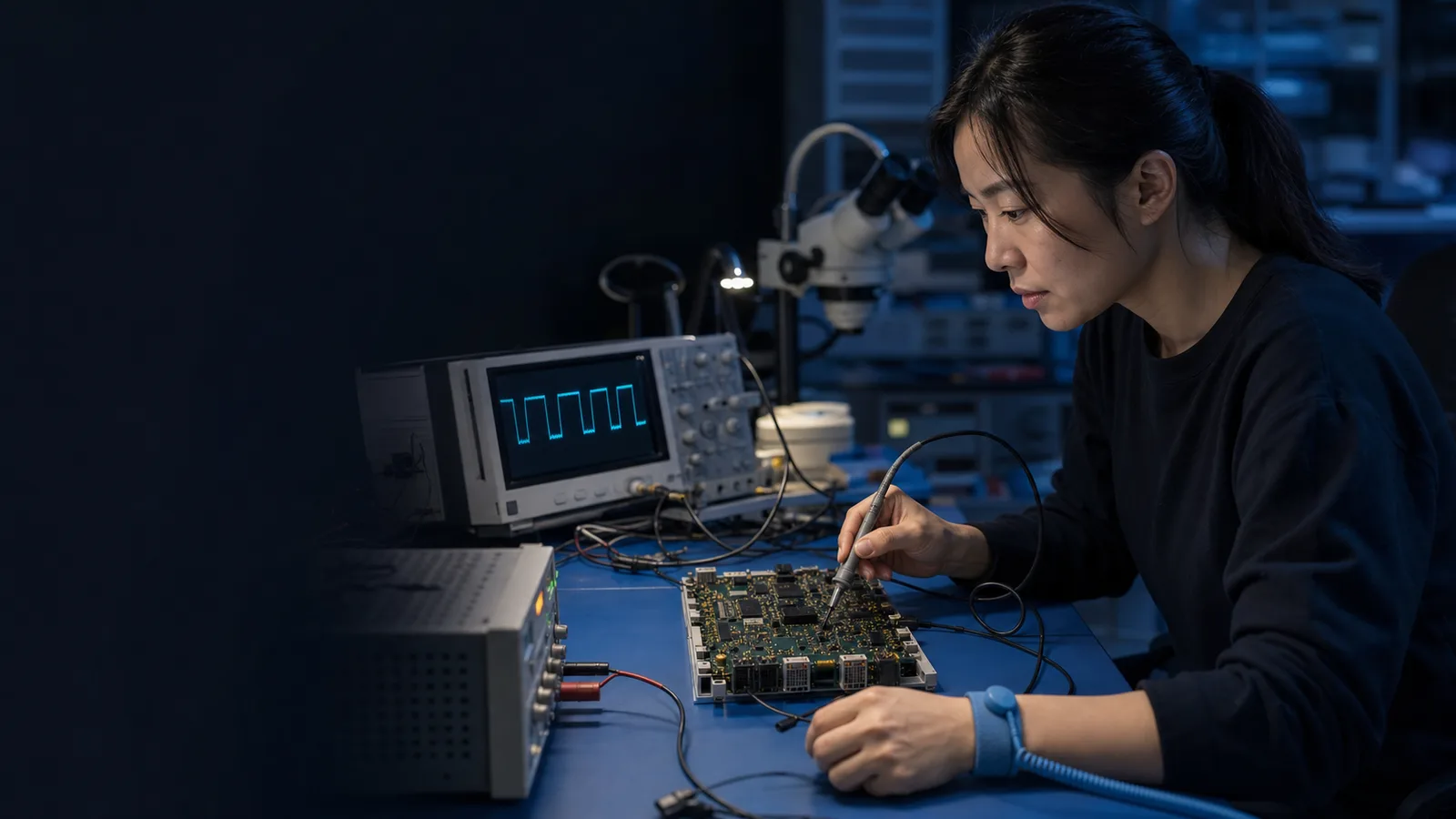
A hardware engineer may spend the morning reviewing a board test or a component failure. You compare the measured behavior with the schematic, isolate the fault, and decide whether the design, part, firmware interaction, or manufacturing process needs to change.
Later, you document the revision, review it with software and systems engineers, and prepare another test. Some roles add time in a laboratory or manufacturing area where the hardware is built.
Education route
How to Become a Computer Hardware Engineer, Step by Step
When you plan how to become a computer hardware engineer, use the sequence below to see where a space-focused degree fits and where you need additional preparation. Computer or electrical engineering is the standard route; a space systems or aerospace degree needs added circuit, digital systems, and programming depth.
- 01
Choose Computer or Electrical Engineering Depth
The typical route is a bachelor’s degree in computer engineering or a related field such as electrical engineering.
- 02
Study Both Circuits and Computing
Circuit design, digital systems, computer organization, operating systems, mathematics, and science make up the foundation. Programming helps you work across the hardware-software boundary.
- 03
Build a Hardware Portfolio
Laboratory work, internships, and functioning hardware projects show that you can design, test, diagnose, and document a system.
- 04
Translate Space Projects Into Hardware Evidence
A satellite or vehicle project helps only when you can explain the board, processor, interfaces, tests, and failure analysis you personally handled.
- 05
Keep Learning After Entry
BLS emphasizes continued learning because components, architectures, tools, and manufacturing methods change quickly.
Where the work happens
Where Computer Hardware Engineers Work
Research Laboratories
Engineers build and test computer models, boards, components, and prototypes in laboratory settings.
Manufacturing Facilities
Some roles oversee how hardware moves from design into repeatable production.
Systems and Federal Organizations
Computer systems firms, research organizations, and federal employers use hardware engineers on equipment where computing is part of a larger system.
Technical directions
Computer Hardware Engineer Specialties and Focus Areas
Circuit Boards and Embedded Systems
This work integrates processors, memory, interfaces, power, and peripherals into a working device.
Processors and Components
Engineers may focus on the computer components that execute, store, or move information.
Hardware-Software Integration
Integration work makes sure equipment behaves correctly with the operating software and firmware.
Hardware Test and Manufacturing
These engineers design test procedures, investigate failures, and help production reproduce the design.
Before you commit
The Hard Parts of Becoming a Computer Hardware Engineer
A Broad Space Degree Needs a Deliberate Technical Bridge
Employers expect computer or electrical engineering foundations. One satellite project cannot replace missing circuits, architecture, and laboratory work.
Hardware and Software Fail Together
A symptom may come from a component, timing, firmware, interface, or manufacturing problem, so troubleshooting crosses disciplines.
The Field Changes Quickly
Engineers must keep up with new components, design methods, and computing systems after graduation.
Testing Is Iterative
A design is not finished when the schematic is drawn. It must survive installation, integration, and repeated tests.
BLS wage data
How Much Do Computer Hardware Engineers Make?
The national median is $161,740. The full OEWS wage span runs from $92,940 at the 10th percentile to $225,330 at the 90th. A percentile is a place in the wage distribution, not a promise about your experience level.
Where to study
Schools That Lead Here
Common questions
How to Become a Computer Hardware Engineer: Common Questions
What Degree Do You Need to Become a Computer Hardware Engineer?
Can an Aerospace Degree Lead to Computer Hardware Engineering?
Do Computer Hardware Engineers Write Software?
Where Do Computer Hardware Engineers Work?
Is a Master’s Degree Required for Computer Hardware Engineering?
Primary sources
Sources for How to Become a Computer Hardware Engineer
- BLS Occupational Outlook Handbook: Computer Hardware Engineers for duties, education, work settings, and credential context.
- BLS Occupational Employment and Wage Statistics, May 2025 for national and state wages and employment counts.
Occupation facts and wage records updated October 9, 2026.