The occupation
What Does an Electrical Engineer Do?
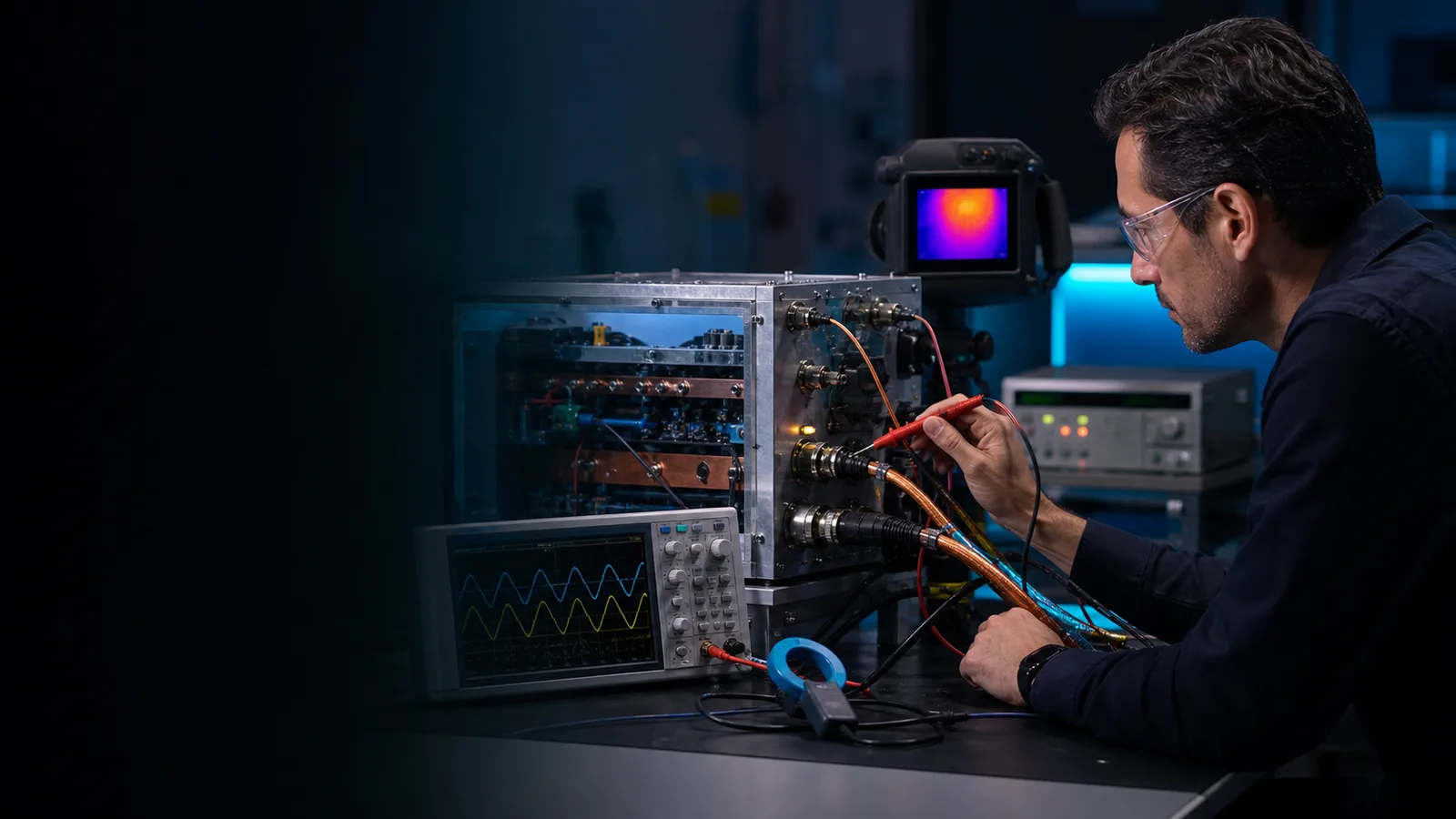
Electrical engineers design and test electrical systems, prepare specifications, evaluate technical problems, and supervise manufacturing or construction. In aerospace work, the same foundation can support power, controls, navigation, communications, and vehicle electrical systems.
Use these duties as the first reality check when planning how to become an electrical engineer.
- Design and develop electrical equipment and systems
- Prepare technical specifications and drawings
- Evaluate designs and investigate technical problems
- Test equipment and analyze results
- Supervise manufacturing, installation, or construction
The working day
A Day in the Life of an Electrical Engineer
A day may start with a requirement and a test result that do not match. You trace the signal or power path, review the circuit and interfaces, and decide whether the problem comes from the design, component, software interaction, or test setup.
The rest of the day may include a design review, laboratory work, documentation, or coordination with mechanical, software, manufacturing, and test teams.
Education route
How to Become an Electrical Engineer, Step by Step
When you plan how to become an electrical engineer, use the sequence below to see where a space-focused degree fits and where you need additional preparation. Electrical engineering is the standard route; aerospace engineering can align when the curriculum and projects center on circuits, controls, power, or communications.
- 01
Earn a Related Engineering Bachelor’s Degree
Electrical engineering, electronics engineering, or a related engineering field is the standard preparation. Programs include mathematics, digital systems, circuits, laboratory, and field studies.
- 02
Close the Gap From Aerospace
If your degree says aerospace, use electives and projects to prove depth in circuits, electronics, controls, power, communications, and embedded systems.
- 03
Get Laboratory and Internship Evidence
Employers value practical experience. A working board, control system, test setup, or power subsystem says more than a list of course titles.
- 04
Pick a Technical Lane
Power, control, radio communication, navigation, instrumentation, and electronic systems require overlapping foundations but different depth.
- 05
Revisit Licensure After Entry
A PE license is not required for entry-level work. It matters later for engineers who oversee work, approve projects, or provide services to the public.
Where the work happens
Where Electrical Engineers Work
Engineering Services and Offices
Electrical engineers design, analyze, document, and coordinate systems in office and project environments.
Research and Development Laboratories
R&D work adds prototypes, instruments, controlled tests, and investigation of new system behavior.
Manufacturing and Federal Work
Electrical engineers also work around production, technical services, and government systems, including aircraft electrical systems.
Technical directions
Electrical Engineer Specialties and Focus Areas
Power Systems
Power work covers generation, distribution, conversion, storage interfaces, and safe delivery to the systems that need it.
Controls and Instrumentation
Control engineers connect sensors, logic, and actuators so a system can hold a desired state.
Communications and Navigation
This work handles signals, radio systems, antennas, data links, positioning, and related equipment.
Vehicle Electrical Systems
Electrical engineers design and test electrical systems used in aircraft and other vehicles.
Before you commit
The Hard Parts of Becoming an Electrical Engineer
The Math and Circuits Must Be Real
A general space studies degree does not replace circuit theory, digital systems, calculus, physics, and laboratory work.
Interfaces Create Failures
Electrical problems often sit at the boundary between hardware, software, power, sensors, controls, and mechanical packaging.
Documentation Has to Survive Review
Specifications, drawings, test results, and design decisions must be clear enough for other teams to build, inspect, and maintain the system.
Public Services May Require Licensure
Experienced engineers may need a PE license when they approve work or provide services directly to the public.
BLS wage data
How Much Do Electrical Engineers Make?
The national median is $120,630. The full OEWS wage span runs from $76,550 at the 10th percentile to $184,300 at the 90th. A percentile is a place in the wage distribution, not a promise about your experience level.
Where to study
Schools That Lead Here
Common questions
How to Become an Electrical Engineer: Common Questions
What Degree Do You Need to Become an Electrical Engineer?
Can an Aerospace Engineering Degree Lead to Electrical Engineering?
What Do Electrical Engineers Do in Aerospace?
Do Electrical Engineers Need a License?
Is Electrical Engineering the Same as Computer Hardware Engineering?
Primary sources
Sources for How to Become an Electrical Engineer
- BLS Occupational Outlook Handbook: Electrical Engineers for duties, education, work settings, and credential context.
- BLS Occupational Employment and Wage Statistics, May 2025 for national and state wages and employment counts.
Occupation facts and wage records updated October 9, 2026.