The occupation
What Does an Aerospace Engineering Technician Do?
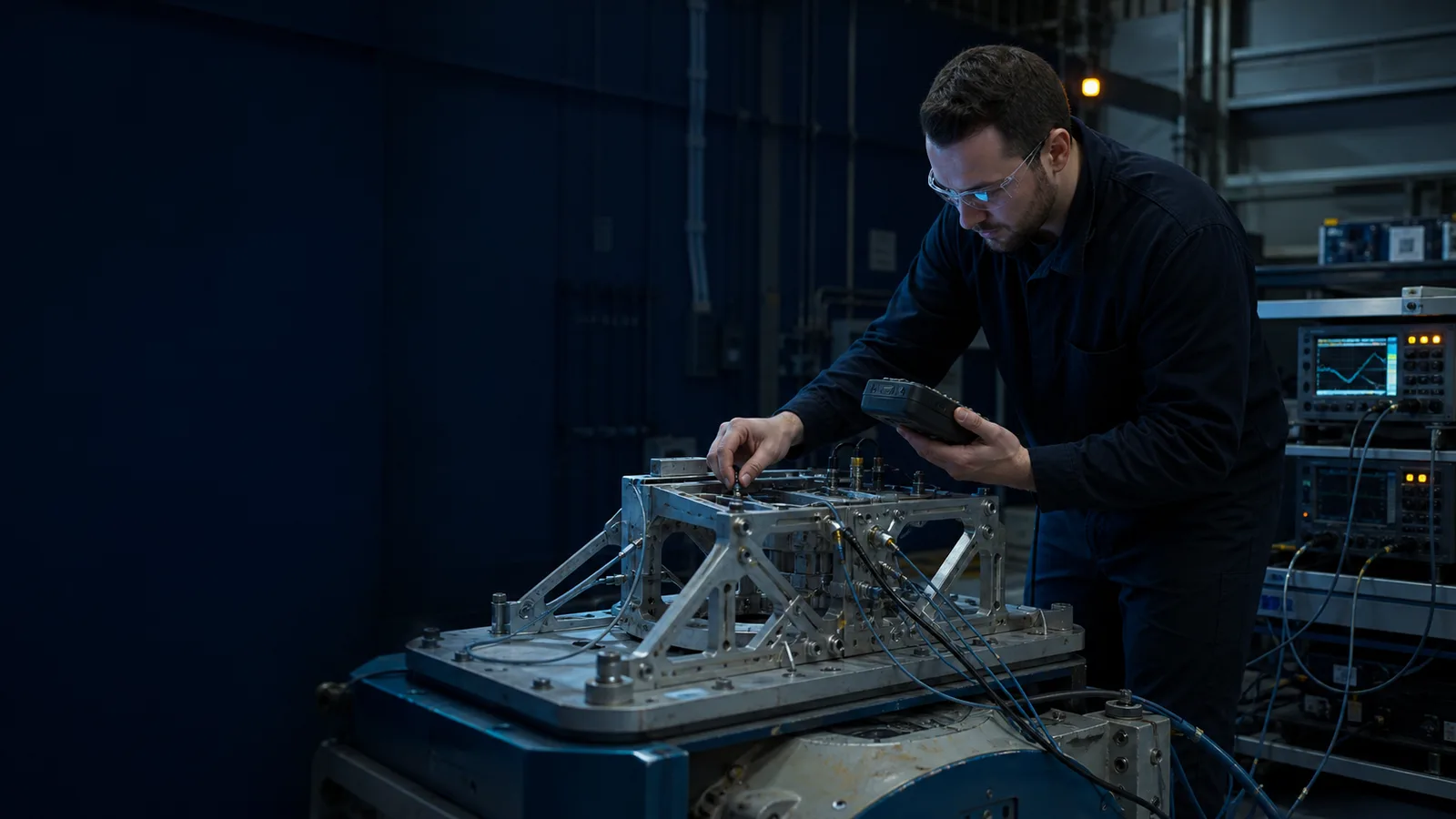
Aerospace engineering and operations technologists and technicians connect engineering designs with tests and production. They prepare facilities, install instruments, calibrate systems, record results, and help find the cause when equipment or a test does not behave as expected.
Use these duties as the first reality check when planning how to become an aerospace engineering technician.
- Build and maintain aerospace test facilities
- Install parts, systems, and instruments for testing
- Operate and calibrate computer and test systems
- Run procedures safely and record test data
- Monitor quality during aerospace production
The working day
A Day in the Life of an Aerospace Engineering Technician
A shift may begin by checking the calibration and safety status of a test setup. You install a component or instrument, confirm the procedure with the engineering team, and watch the system closely as the test runs.
Afterward, you preserve the result. That means recording measurements, flagging anomalies, tracing equipment faults, and preparing the setup for the next run. In production, the same attention turns toward assembly and quality checks.
Education route
How to Become an Aerospace Engineering Technician, Step by Step
When you plan how to become an aerospace engineering technician, use the sequence below to see where a space-focused degree fits and where you need additional preparation. An associate degree in engineering technology or a related field is the typical entry route, although some employers consider a certificate or high school preparation.
- 01
Prepare for Technical Math and Measurement
Math, science, drafting, and information technology are useful preparation because the work combines dimensions, instruments, systems, and technical records.
- 02
Choose a Technical Education Route
An associate degree in engineering technology or a related field is the typical route. Some employers consider a certificate or high school diploma, but the job still requires demonstrable technical skill.
- 03
Get Time on Real Equipment
Laboratory work, manufacturing experience, and test projects help you learn calibration, safe procedures, troubleshooting, and documentation.
- 04
Target a Work Setting
Test laboratories, aerospace manufacturing, engineering services, and research organizations use different equipment and work rhythms.
- 05
Check Clearance Requirements Early
Some defense-related jobs require a security clearance, and certain clearance levels may require U.S. citizenship.
Where the work happens
Where Aerospace Engineering and Operations Technologists and Technicians Work
Manufacturing Plants
Technologists and technicians may work directly with assembly, production equipment, and quality checks.
Test Laboratories and Facilities
This setting centers on instruments, computer systems, controlled procedures, measurements, and troubleshooting.
Engineering Offices
Some work happens beside engineers in office and simulation environments, especially when results must be analyzed and procedures revised.
Technical directions
Aerospace Engineering Technician Specialties and Focus Areas
Test Operations
Test technicians prepare equipment, run procedures, monitor safety, and record results.
Instrumentation and Calibration
This work keeps sensors, computer systems, and measurement equipment aligned with test and manufacturing requirements.
Production Quality
Production roles inspect and monitor the systems and parts that go into aircraft and spacecraft.
Simulation Support
Some technologists and technicians program and run simulations used to test new designs.
Before you commit
The Hard Parts of Becoming an Aerospace Engineering Technician
Precision Is the Job
The measurements and records have to be accurate enough for an engineer to trust. A loose process can invalidate a test.
The Setting Can Be Industrial
Manufacturing work may involve assembly, machinery, noise, and production schedules rather than a desk-only environment.
Shifts and Overtime Can Happen
BLS notes that project and employer needs can bring shift work or overtime.
You Work Through Failures in Real Time
Equipment malfunctions and unexpected test results demand calm troubleshooting while the team is watching the schedule.
BLS wage data
How Much Do Aerospace Engineering and Operations Technologists and Technicians Make?
The national median is $82,890. The full OEWS wage span runs from $59,050 at the 10th percentile to $125,160 at the 90th. A percentile is a place in the wage distribution, not a promise about your experience level.
Where to study
Schools That Lead Here
Common questions
How to Become an Aerospace Engineering Technician: Common Questions
What Education Does an Aerospace Engineering Technician Need?
What Does an Aerospace Engineering Technician Do?
Is an Aerospace Engineering Technician the Same as an Aerospace Engineer?
Do Aerospace Technicians Work on Spacecraft?
Can Aerospace Technician Jobs Require a Security Clearance?
Primary sources
Sources for How to Become an Aerospace Engineering Technician
- BLS Occupational Outlook Handbook: Aerospace Engineering and Operations Technologists and Technicians for duties, education, work settings, and credential context.
- BLS Occupational Employment and Wage Statistics, May 2025 for national and state wages and employment counts.
Occupation facts and wage records updated October 9, 2026.