The occupation
What Does an Avionics Technician Do?
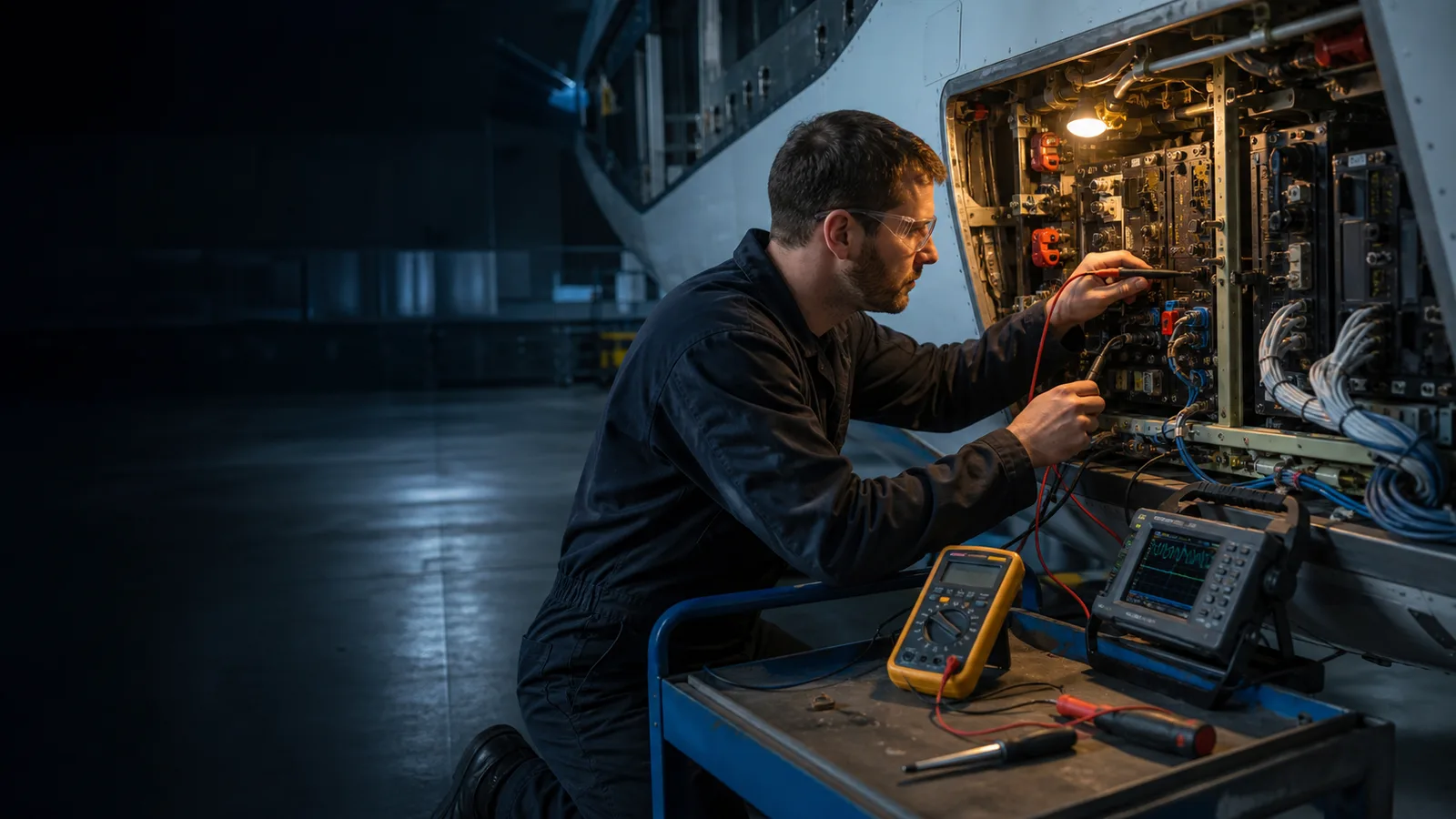
Avionics technicians test electronic equipment, interpret flight-test data, diagnose malfunctions, repair or replace components, install software and instrument panels, and keep the maintenance records required for safe operation.
Use these duties as the first reality check when planning how to become an avionics technician.
- Test aircraft electronic equipment with electrical instruments
- Interpret flight-test data and diagnose malfunctions
- Repair or replace electronic components
- Install software, controls, junction boxes, and instrument panels
- Document maintenance and repair work
The working day
A Day in the Life of an Avionics Technician
A shift may begin with a fault report on a communication, navigation, radar, or instrument system. You review the maintenance record, test the equipment with electrical instruments, and trace the problem to a component, connection, software installation, or wider system issue.
After the repair, you test the system again and document exactly what changed. The aircraft schedule matters, but the work still has to meet safety rules and performance standards.
Education route
How to Become an Avionics Technician, Step by Step
When you plan how to become an avionics technician, use the sequence below to see where a space-focused degree fits and where you need additional preparation. A general space studies degree is not the normal route; technicians typically add aviation maintenance education, employer training, military training, or the credentials required for their work.
- 01
Choose an Aviation Maintenance Route
Common routes include a postsecondary certificate, an associate degree, military training, or employer and on-the-job preparation.
- 02
Learn on Real Aircraft Systems
The job requires hands-on skill with tools, instruments, wiring, components, software, maintenance instructions, and safety procedures.
- 03
Match the Credential to the Work
FAA requirements depend on the maintenance task. Some avionics technicians are certified by an employer, hold an airframe rating, or use an optional credential to meet experience rules.
- 04
Add Communication Licensing When Needed
Technicians who work on certain communications equipment may need an FCC license.
- 05
Expect Continued Type and System Training
Aircraft, equipment, employers, and authorizations shape what work you can perform independently.
Where the work happens
Where Avionics Technicians Work
Hangars and Repair Stations
Technicians work around aircraft, tools, test equipment, components, and maintenance records.
Airfields and Military Installations
Some work happens outdoors or on military bases, with noise, weather, engines, and operational schedules.
Aerospace Manufacturing
Manufacturing roles install, test, and troubleshoot avionics as aircraft and systems are built.
Technical directions
Avionics Technician Specialties and Focus Areas
Communication and Navigation
These systems connect the aircraft to other operators and help crews determine and follow position and route.
Radar and Instruments
Technicians diagnose sensors, displays, radar, and flight-instrument systems.
Installation and Integration
Installation work fits controls, junction boxes, wiring, software, and panels into a working aircraft system.
Maintenance and Fault Isolation
Maintenance roles use test data, instruments, manuals, and system knowledge to find and correct failures.
Before you commit
The Hard Parts of Becoming an Avionics Technician
The Credential Rules Are Tied to the Work
A college degree does not replace the FAA, employer, supervision, or experience rules attached to specific aircraft maintenance tasks.
Safety and Deadlines Collide
The aircraft may be waiting, but the technician still must follow exact standards and document the repair correctly.
The Work Can Be Physical and Loud
Hangars and airfields bring noise, vibration, ladders, awkward positions, and safety equipment.
Schedules Include Nights and Weekends
BLS notes that technicians may work 8- or 10-hour shifts that include nights, weekends, and holidays.
BLS wage data
How Much Do Avionics Technicians Make?
The national median is $82,280. The full OEWS wage span runs from $49,410 at the 10th percentile to $113,680 at the 90th. A percentile is a place in the wage distribution, not a promise about your experience level.
Where to study
Schools That Lead Here
Common questions
How to Become an Avionics Technician: Common Questions
What Education Does an Avionics Technician Need?
Can a Space Studies Degree Make You an Avionics Technician?
Do Avionics Technicians Need FAA Certification?
What Systems Do Avionics Technicians Repair?
Where Do Avionics Technicians Work?
Primary sources
Sources for How to Become an Avionics Technician
- BLS Occupational Outlook Handbook: Avionics Technicians for duties, education, work settings, and credential context.
- BLS Occupational Employment and Wage Statistics, May 2025 for national and state wages and employment counts.
Occupation facts and wage records updated October 9, 2026.