The occupation
What Does a Physicist Do?
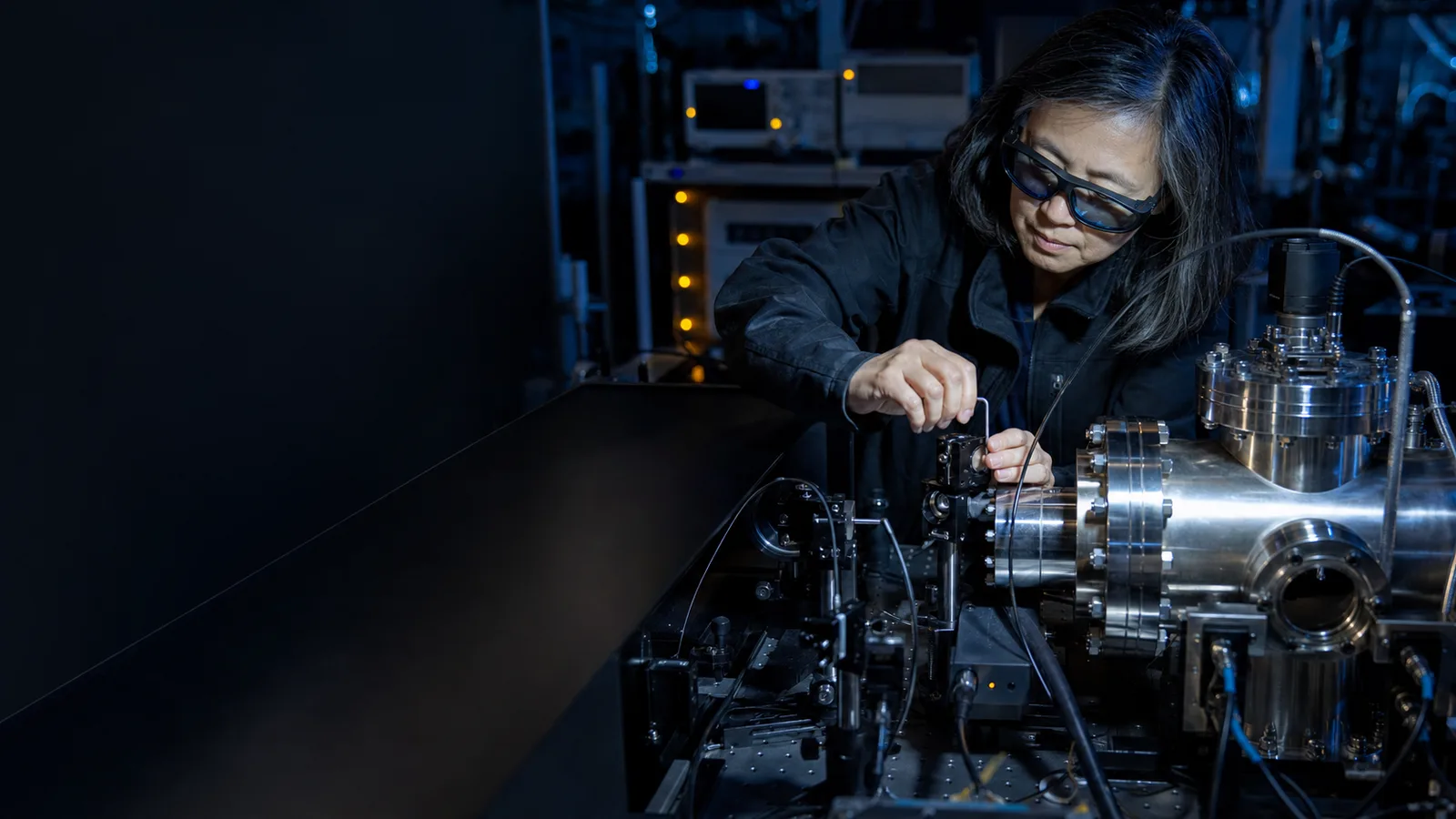
Physicists develop theories and models, plan experiments, analyze data, build scientific equipment, write software, publish papers, present findings, and seek research funding. Some work in basic research, while others apply physics to technology and practical problems.
Use these duties as the first reality check when planning how to become a physicist.
- Develop scientific theories and mathematical models
- Plan experiments and studies
- Analyze physical data with mathematics and software
- Design scientific equipment and sensors
- Publish results, present findings, and apply for funding
The working day
A Day in the Life of a Physicist
A physicist may spend the morning checking an experiment or simulation against a theory. Unexpected results lead to more than one possibility: a new effect, a bad assumption, or an instrument problem. The work is deciding which explanation survives the evidence.
The afternoon can shift to code, a team meeting, a paper draft, or a funding proposal. Senior scientists also divide work across a team and review whether the methods and conclusions hold up.
Education route
How to Become a Physicist, Step by Step
When you plan how to become a physicist, use the sequence below to see where a space-focused degree fits and where you need additional preparation. Research and academic physicist jobs typically require a Ph.D.; some entry-level federal physicist roles accept a physics bachelor’s degree.
- 01
Complete a Physics-Centered Bachelor’s Degree
Graduate physics and astronomy programs expect a strong base in mechanics, electromagnetism, quantum physics, thermodynamics, calculus, linear algebra, and statistics.
- 02
Learn to Compute as Well as Calculate
Computer science is useful for gathering, analyzing, and modeling scientific data. Research experience shows that you can use those tools on an unanswered question.
- 03
Choose the Role Before Choosing Graduate School
Research and academic work typically requires a Ph.D. Some entry-level federal physicist positions accept a physics bachelor’s degree.
- 04
Complete Original Doctoral Research
A Ph.D. develops depth in a subfield and demonstrates that you can plan, execute, explain, and defend independent research.
- 05
Expect a Possible Postdoctoral Stage
BLS says physicists who seek research careers may begin in postdoctoral positions that typically last 2 to 3 years.
Where the work happens
Where Physicists Work
Research Laboratories
Experimental and applied physicists use laboratories, specialized equipment, sensors, and computing systems.
Universities
Academic physicists combine research with teaching, student supervision, publication, and funding work.
Federal Agencies and National Laboratories
Government and federally supported laboratories employ physicists in research and applied technical work. Some positions require citizenship and a security clearance.
Technical directions
Physicist Specialties and Focus Areas
Plasma and Space Physics
Plasma physicists study a state of matter found in stars and interplanetary space as well as in laboratory systems.
Computational Physics
Computational physicists use algorithms, numerical analysis, and datasets to study physical systems.
Particle, Nuclear, and Quantum Physics
These fields examine matter and interactions at very small scales and may require large research facilities.
Materials and Applied Physics
Applied physicists use physical principles to develop materials, instruments, electronics, communication, navigation, and other technology.
Before you commit
The Hard Parts of Becoming a Physicist
Most Research Routes Require a Doctorate
The bachelor’s degree is usually the start of the path. Doctoral research and a possible postdoc extend the timeline.
The Math Does Not Become Optional
Calculus, geometry, algebra, statistics, and mathematical models stay central to the work.
Research Can Fail Cleanly
An experiment or model may not support the idea you began with. You must be willing to redesign the approach and report what the evidence says.
Funding and Communication Matter
Physicists write proposals, papers, reports, and presentations. Technical depth alone does not remove those responsibilities.
BLS wage data
How Much Do Physicists Make?
The national median is $172,250. The full OEWS wage span runs from $82,110 at the 10th percentile to $274,110 at the 90th. A percentile is a place in the wage distribution, not a promise about your experience level.
Where to study
Schools That Lead Here
Common questions
How to Become a Physicist: Common Questions
What Degree Do You Need to Become a Physicist?
Can a Space Science Degree Lead to Physics?
Do Physicists Need a Postdoc?
Where Do Physicists Work?
Do Physicists Write Code?
Primary sources
Sources for How to Become a Physicist
- BLS Occupational Outlook Handbook: Physicists for duties, education, work settings, and credential context.
- BLS Occupational Employment and Wage Statistics, May 2025 for national and state wages and employment counts.
Occupation facts and wage records updated October 9, 2026.